Why a Sentence That Reads Well Can Still Fail on Air
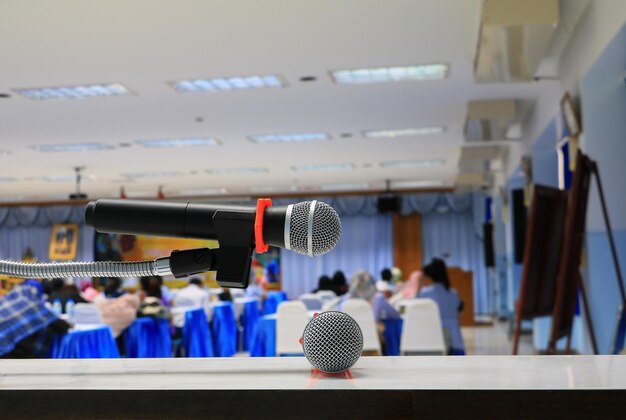
A script that scans cleanly on the page can still trip a reader the moment it's spoken aloud. The reason is structural rather than stylistic: written prose allows a reader's eye to jump backward, reread a clause, and reconstruct meaning from a sentence's overall shape. A listener has none of that. Once a phrase has passed, it's gone, and if the sentence hasn't delivered its meaning in order, the listener is left trying to hold together fragments that no longer connect.
This is why long, layered sentences — the kind that read as sophisticated on a page — tend to be the first thing marked up in a broadcast review. It isn't that the ideas are wrong; it's that the sentence asks the ear to do work the eye can do more easily. Breaking a compound sentence into two shorter ones almost always improves clarity, even when the total word count goes up slightly.
Where attribution belongs
Written journalism often places attribution after a quote: "the policy was poorly explained," the spokesperson said. On the page, a reader can hold the quote loosely until the source arrives. Spoken aloud, the listener spends the whole quote unsure whose claim they're hearing, which undercuts trust in the material before the attribution ever lands. Moving the source to the front of the sentence — the spokesperson said the policy was poorly explained — costs nothing in accuracy and gives the listener somewhere to place the words as they arrive.
Numbers cause a similar problem. A precise figure that's easy to scan in text can be genuinely hard to process by ear, especially if several numbers appear close together. Rounding gently, or pairing a number with a comparison a listener can picture, usually serves the story better than strict precision that nobody retains anyway.
- Keep sentences to one idea where possible; split compound clauses into separate sentences.
- Put the source before the claim, not after it.
- Round numbers and anchor them to something concrete a listener can picture.
- Read every script aloud before calling it finished — problems that hide on the page rarely survive being spoken.
Pacing is part of the writing, not just the delivery
Reporters sometimes treat pacing as a performance issue, separate from the script itself. In practice, pacing starts on the page. A script that front-loads three pieces of information in one sentence forces a rushed delivery no matter how skilled the reader is. Spacing information across several shorter sentences gives both the reader and the listener room to actually absorb what's being said, which tends to matter more to comprehension than tone of voice ever does.
Have a script that needs a second set of ears?
The Broadcast Script Review covers up to three scripts, with a marked copy and a short call to walk through the changes.
Get in touch